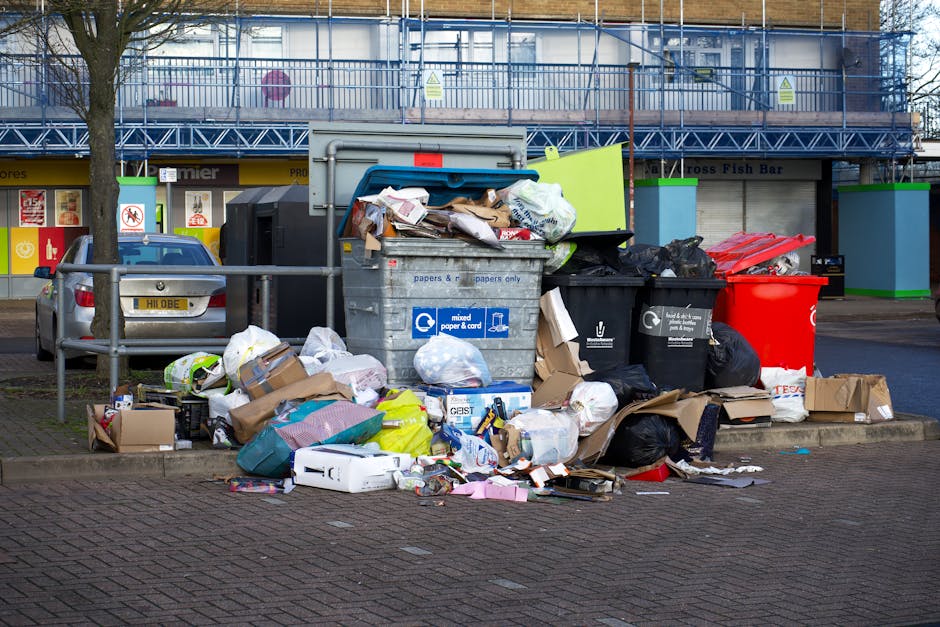
Richmond TW9: Quick Guide to Bulky Rubbish Collection
If you live or work in Richmond TW9, bulky rubbish has a habit of appearing at the worst possible time. A sofa that won't fit through the hallway, a broken wardrobe in the spare room, old garden clutter after a clear-out, or a pile of renovation leftovers you do not want sitting around for another week. The good news is that bulky rubbish collection does not need to be complicated. With the right plan, you can clear space quickly, avoid unnecessary stress, and make sure items are handled responsibly.
This guide explains how bulky waste collection typically works in Richmond TW9, what you can and cannot leave out, what to expect from a professional service, and how to choose the most practical option for your property. It also covers timing, compliance, common mistakes, and the small details that often make a big difference on the day.
For readers comparing wider property-clearance help, it can also be useful to look at related services such as furniture disposal, house clearance, and general waste removal when the job is bigger than a single item or two.
Quick takeaway: bulky rubbish collection works best when you sort items first, check access, separate reusable materials where possible, and choose a service that matches the size and type of waste you need removed.
Table of Contents
- Why bulky rubbish collection matters in Richmond TW9
- How bulky rubbish collection works
- Key benefits and practical advantages
- Who needs this service and when it makes sense
- Step-by-step guidance
- Expert tips for better results
- Common mistakes to avoid
- Tools, resources and recommendations
- Law, compliance, standards and best practice
- Options and comparison table
- Case study or real-world example
- Practical checklist
- Conclusion
- Frequently asked questions
Why Richmond TW9: Quick Guide to Bulky Rubbish Collection Matters
Bulky rubbish is not the same as everyday household waste. A mattress, a broken desk, an old fridge, or several bags of dismantled shelving needs more than a standard bin collection. In a busy area like Richmond TW9, that matters because space is limited, access can be tight, and leaving large items outside for too long can create inconvenience for neighbours and passers-by.
There is also a practical side that people sometimes overlook. Bulky waste can block hallways, garages, loft access, or loading points. If you are preparing a move, managing an estate, refurbishing a flat, or clearing out an office, those items can slow everything else down. A sensible bulky rubbish collection plan keeps the rest of the project moving.
For local homeowners, landlords, letting agents, and small businesses, the value is straightforward: reclaim space, reduce clutter, and avoid trying to squeeze oversized items into a normal disposal routine that was never designed for them.
There is another reason it matters. Not all bulky items should be treated alike. Some can be reused, some should be separated for recycling, and some may need careful handling because of weight, sharp edges, or electrical components. A good collection service understands that mix and works accordingly. That is one reason residents often prefer a service-led approach rather than trying to manage multiple separate trips themselves.
Richmond TW9 has a wide mix of property types, from flats and terraces to larger family homes and commercial premises. That variety means collection needs can differ significantly from one street to the next. A third-floor flat with no lift is a very different job from a driveway collection. The service has to fit the property, not the other way around.
How Richmond TW9: Quick Guide to Bulky Rubbish Collection Works
The process is usually simpler than people expect. In most cases, it starts with a quick description of what needs to go. You may be asked to list the items, estimate the volume, explain access, and mention anything unusual such as heavy lifting, restricted parking, or items that need disassembly.
A clear quote depends on accurate information. If you can, describe the size and type of waste rather than just saying "a lot of stuff." That may sound obvious, but it saves time and avoids surprises later. A single wardrobe is very different from a mixed load of furniture, bags, and building offcuts.
On collection day, the team usually arrives, confirms the load, and removes the items for loading and disposal. If the items are reusable, recyclable, or suitable for specialist handling, they are normally separated where possible. Reputable operators also think about access, safety, and the impact on shared spaces. In a block of flats, for instance, that can mean avoiding damage to walls, lifts, and communal areas.
For larger clear-outs, bulky rubbish collection may be combined with related services. If your items include old sofas or beds, furniture clearance may be the more efficient route. If the job has grown into a whole-property clear-out, home clearance or flat clearance can make the process much easier.
A useful way to think about it is this: the service is not just about lifting things away. It is about planning the removal so the right items are taken, the property is protected, and the waste is handled in a sensible and lawful way.
Key Benefits and Practical Advantages
The most obvious benefit is space. That sounds simple, but anyone who has lived with bulky clutter knows how much it affects a room. A spare bed frame in a hallway, a broken cabinet in a garage, or a stack of old office chairs can make a property feel smaller and harder to use.
There is also the benefit of convenience. Rather than hiring transport, lifting heavy items yourself, and trying to work out where everything can go, a collection service handles the difficult part. That matters especially when items are awkward, heavy, or stored somewhere with poor access.
Another major advantage is risk reduction. Large items can be dangerous to move without the right technique. A scratched wall, a strained back, or a broken stair rail is far more expensive than a proper removal. Truth be told, the sofa is rarely the problem; the staircase is.
Bulky rubbish collection can also support better recycling and reuse. Not every item is waste in the strictest sense. Some furniture can be repurposed, and some materials can be diverted away from landfill depending on condition and composition. If sustainability matters to you, look for a provider that takes recycling seriously and explains what happens next. You can explore a provider's approach via its recycling and sustainability information.
For businesses, the benefit is operational. A cluttered office, storeroom, or back-of-house area can affect workflow, health and safety, and even customer experience. That is why some companies prefer combining bulky collection with office clearance or business waste removal when they need a cleaner, fuller reset.
Who This Is For and When It Makes Sense
This type of collection is useful for a wide range of people. Homeowners often need it after buying new furniture, replacing white goods, or clearing a room for renovation. Landlords may need it between tenancies when tenants leave unwanted items behind. Letting agents and property managers often need a fast response when a flat must be made ready for viewings or works.
It also makes sense for trades and refurbishment projects. A small renovation can generate more bulky waste than people expect: old doors, broken units, timber offcuts, damaged fixtures, packaging, and the occasional "we'll deal with it later" pile that somehow grows overnight. If the waste comes from building work, builders waste clearance is a more suitable fit than a general rubbish pickup.
Garden projects are another common trigger. Fencing panels, plant pots, broken benches, soil-filled bags, and tired outdoor furniture all count as bulky items in practice. For outside spaces, garden clearance can be a better match.
It is also a sensible choice if:
- you need items removed quickly before a move
- you do not have a suitable vehicle
- the item is too heavy or awkward to move safely
- you want to avoid multiple trips to a disposal site
- you need help with sorting, lifting, or loading
- you want a clearer route for reuse or recycling
For anyone with lofts, garages, or storage areas packed full of forgotten items, a broader clearance may be more cost-effective than removing one item at a time. That is where loft clearance and garage clearance can help narrow the job to the right scope.
Step-by-Step Guidance
1. Identify exactly what needs to go
Start by separating the items you definitely want removed from the items you may want to keep, donate, repair, or sell. A common mistake is to wait until the team arrives before deciding. That can slow everything down, especially in smaller homes or shared buildings.
2. Group items by type
Put furniture together, keep electricals separate where possible, and note anything sharp, fragile, or especially heavy. Mixed loads are common, but simple grouping helps the collection run smoothly and can make quoting easier.
3. Check access carefully
Measure doorways if needed, note staircases, check lift access, and think about parking or loading restrictions. In Richmond TW9, access can be the deciding factor that turns a straightforward removal into a more involved job.
4. Ask for a clear, itemised quote where possible
Pricing often depends on volume, weight, labour, access, and disposal type. A good quote should explain what is included. If you want to understand how the pricing structure works before booking, review the provider's pricing and quotes page and ask anything that is unclear.
5. Prepare the property
Move smaller loose items out of the way, protect floors if necessary, and make sure the route to the items is clear. If you live in a flat, let neighbours know if shared areas might be briefly affected. Small steps here save a surprising amount of time later.
6. Confirm what happens to the items
Ask whether the items will be reused, recycled, or disposed of. If the provider offers guidance on sorting and responsible handling, that is usually a good sign. It indicates process, not just enthusiasm.
7. Keep records if the clearance is tied to a business or property handover
For commercial clients, keeping a simple note of what was removed, when it was collected, and who handled the work can be useful for internal records, audits, or landlord discussions.
Expert Tips for Better Results
The best bulky rubbish collections tend to be the ones that were planned just enough to avoid friction. Not over-planned. Just enough.
Here are the habits that make a real difference:
- Photograph the items before booking. A few honest pictures usually beat a long description.
- Be specific about awkward access. Narrow stairs, basement routes, and top-floor flats all change the job.
- Separate reuse from rubbish early. A chair that can be donated should not be mixed with damaged items if you want clean sorting.
- Schedule around other works. If decorators, cleaners, or movers are involved, bulky collection should happen at the right moment, not as an afterthought.
- Think in zones. One room, one garage, one loft section at a time keeps the task manageable.
- Choose a provider that can handle more than one item type. That reduces the need for multiple bookings if the job grows.
One practical observation: people often underestimate how much time is lost by carrying items around twice. If the item is destined for removal, keep it where it can be accessed safely. That small decision helps the team work efficiently and protects the property.
If you are dealing with bulky items alongside general decluttering, a broader waste removal solution can be more convenient than treating each item as a separate task.
Common Mistakes to Avoid
Most problems come from avoidable assumptions. The first is assuming all bulky waste can be handled in the same way. It cannot. A sofa, a broken freezer, and a load of wood offcuts may all be bulky, but they require different handling.
The second mistake is underestimating access. A front room might look easy from the street, yet a narrow staircase or awkward corner can make moving large furniture much harder. If the collection team cannot safely remove the item in one piece, disassembly may be required.
The third is leaving booking until the last minute. If you are working to a move-out date, a tenancy handback, or the start of refurbishment works, tight timing can create unnecessary pressure. A bit of notice gives you more flexibility.
The fourth is mixing in items you were not ready to let go of. It sounds trivial, but in a busy clear-out it is very easy to lose track of what should stay and what should go. Once removed, it is gone. That is the whole point, and also the warning.
Another common issue is failing to ask about recycling and disposal routes. Responsible collection is not just about removal. It is about what happens after the van leaves.
Tools, Resources and Recommendations
You do not need specialist equipment to prepare for bulky rubbish collection, but a few simple tools help:
- tape measure for checking access
- labels or sticky notes for sorting items
- gloves for handling dusty or rough surfaces
- basic screwdrivers or Allen keys for light dismantling
- floor protection for tight routes
- clear bags or boxes for small loose parts
If you are clearing an entire room, the most useful resource is often a written list. It does not need to be fancy. Write down what stays, what goes, and what might need dismantling. That list becomes your quick reference on the day.
For those who want a service that aligns with property-specific needs, it may help to explore house clearance for full homes, furniture clearance for larger household items, or furniture disposal where the focus is specifically on unwanted furniture.
If you need reassurance about standards and company practices, service pages such as health and safety policy, insurance and safety, and about us can help you understand how the business approaches care, risk, and responsibility.
Law, Compliance, Standards, or Best Practice
Bulky rubbish collection should be handled in line with normal UK waste-handling expectations, including safe transfer, appropriate sorting, and responsible disposal. As a customer, you do not need to know every technical detail, but you should expect the service to operate lawfully and sensibly.
A few cautious best-practice points are worth keeping in mind:
- do not leave waste where it could obstruct pavements, entrances, or shared access
- make sure electrical items and appliances are handled appropriately
- separate hazardous or specialist items and ask for advice before booking
- keep evidence of what was removed if the clearance relates to a tenancy, business, or property handover
- choose a provider that can explain its disposal and recycling approach clearly
If you are a business customer, record-keeping and duty-of-care expectations may be more relevant to your internal procedures. If you are a homeowner, the main thing is to use a reputable service and avoid handing items to anyone who cannot explain where waste will go.
It is also sensible to review practical terms before booking. That includes payment expectations, cancellation terms, and any access-related conditions. Pages such as payment and security, terms and conditions, and complaints procedure are worth checking if you want clarity before the appointment.
For privacy and website usage information, visitors can also refer to the provider's privacy policy and cookie policy. If accessibility matters to you, the accessibility statement is a useful reference point too.
Options and Comparison Table
There is more than one way to deal with bulky waste in Richmond TW9. The right option depends on the volume, item type, time pressure, and how much lifting you want to do yourself.
| Option | Best for | Pros | Limitations |
|---|---|---|---|
| Self-removal | One or two manageable items | Potentially low direct cost if you already have transport | Heavy lifting, time, parking, disposal logistics |
| Professional bulky item collection | Most household and mixed bulky loads | Fast, convenient, less physical effort, better for awkward items | Cost depends on size, access, and load type |
| Furniture-specific service | Sofas, wardrobes, beds, tables | Efficient for large household items, often easier to plan | Less suitable if the job also includes mixed waste |
| Full property clearance | Houses, flats, lofts, garages, offices | Best for larger projects and end-of-tenancy clear-outs | More involved than a single-item collection |
| Specialist builders waste clearance | Renovation and trade waste | Good for mixed construction debris and site clean-up | Not ideal for everyday household items |
In practice, many people start by thinking they need a simple pickup, then realise the project is really a small clearance. That is perfectly normal. The key is matching the method to the actual job, not the version you hoped it would be.
Case Study or Real-World Example
Consider a typical Richmond TW9 flat clearance scenario. A resident is moving out at short notice and has several bulky items left behind: a mattress, a chest of drawers, two shelving units, and an old desk. On paper, none of those items sounds dramatic. In reality, they are awkward, take up a lot of space, and would be difficult to move safely without help.
The practical solution is to group the items, check whether any can be reused, confirm access through the building, and arrange collection in a time slot that avoids disruption to neighbours. Because the items are all furniture, a furniture-focused clearance or flat clearance approach is more efficient than trying to dispose of each piece separately.
Now compare that with a small refurbishment job. A homeowner has replaced a kitchen worktop, removed a few old cupboards, and ended up with offcuts, packaging, and a broken chair that was stored in the utility room. That is not really a single bulky item job anymore. A mixed clearance approach, possibly including builders waste clearance, is the cleaner fit.
The lesson is simple: the best outcome usually comes from identifying the real shape of the job early. Once you do that, the rest becomes much easier.
Practical Checklist
Use this checklist before collection day:
- List every bulky item you want removed
- Separate items to keep, donate, recycle, or dispose of
- Take photos of large or unusual pieces
- Measure access routes if the space is tight
- Check for stairs, lifts, parking, or loading restrictions
- Remove personal belongings from furniture and drawers
- Disassemble items only if it is safe to do so
- Protect floors and walls where needed
- Confirm timing, pricing, and what is included
- Ask how items will be handled after collection
If you work through that list, you will be in much better shape than most people on a rushed clear-out day.
Conclusion
Bulky rubbish collection in Richmond TW9 is at its best when it is treated as a small project rather than a last-minute chore. Define the items, check the access, choose the right service, and make sure the disposal route is clear. That approach saves time, reduces stress, and gives you a better result.
Whether you are clearing one oversized item or coordinating a larger property tidy-up, the same principles apply: plan properly, keep the job safe, and use a service that fits the task. If your clear-out includes furniture, household clutter, office items, or renovation debris, it is usually worth choosing a tailored service rather than forcing everything into one generic category.
For a straightforward next step, review the relevant service pages, check the practical details, and request a quote that reflects the real scope of your waste. A few minutes of planning now can save a great deal of hassle later.
Get a free quote today and see how much you can save.
Frequently Asked Questions
What counts as bulky rubbish in Richmond TW9?
Bulky rubbish usually means items that are too large, heavy, or awkward for standard household bins. Common examples include sofas, wardrobes, mattresses, beds, shelving, desks, and large appliances.
Can I leave bulky items outside for collection?
Only if the arrangement explicitly allows it and the items will not create an obstruction. In shared or public areas, it is usually better to keep items on private property until the collection time.
How do I know whether I need a bulky collection or full clearance?
If you are removing one or two large items, a bulky collection may be enough. If you are clearing several rooms, a loft, a garage, or an entire property, a broader clearance service is often more efficient.
Is furniture removed separately from other waste?
Often yes, because furniture may need different handling from mixed waste. If the job is mostly household items, a furniture-focused service can be a practical fit.
What should I do before the collection team arrives?
Sort the items, clear access routes, remove personal belongings, and confirm any tight access issues such as stairs, parking, or lift restrictions. A little preparation helps the job go smoothly.
Can bulky rubbish include electrical items?
Sometimes, but electrical items should be handled appropriately and may need separate attention depending on condition and type. Always mention appliances or electronics when requesting a quote.
How much does bulky rubbish collection cost?
Costs usually depend on the volume, weight, item type, labour required, and access conditions. For the most accurate figure, ask for a tailored quote rather than relying on a guess.
What happens to the items after collection?
That depends on the condition of the waste and the provider's disposal process. Good services aim to reuse or recycle suitable items and dispose of the remainder responsibly.
Do I need to be present during collection?
Usually yes, or at least someone authorised to confirm the items should be removed. That avoids confusion and helps prevent accidental removal of anything you wanted to keep.
What if my bulky waste comes from renovation work?
If it includes timber, offcuts, fixtures, packaging, or demolition debris, builders waste clearance is often the more suitable option. It is worth matching the service to the type of waste, not just the size.
Can a bulky collection help with a flat or office move?
Yes. If you are leaving a flat or relocating a workspace, bulky rubbish collection can remove unwanted furniture, storage items, and leftover clutter that would otherwise delay the move.
How do I choose a trustworthy provider?
Look for clear pricing, sensible communication, safety information, and transparent guidance on disposal and recycling. Pages such as about us, health and safety, and insurance information can help you assess the company before booking.